
Before the Cultuurstelsel
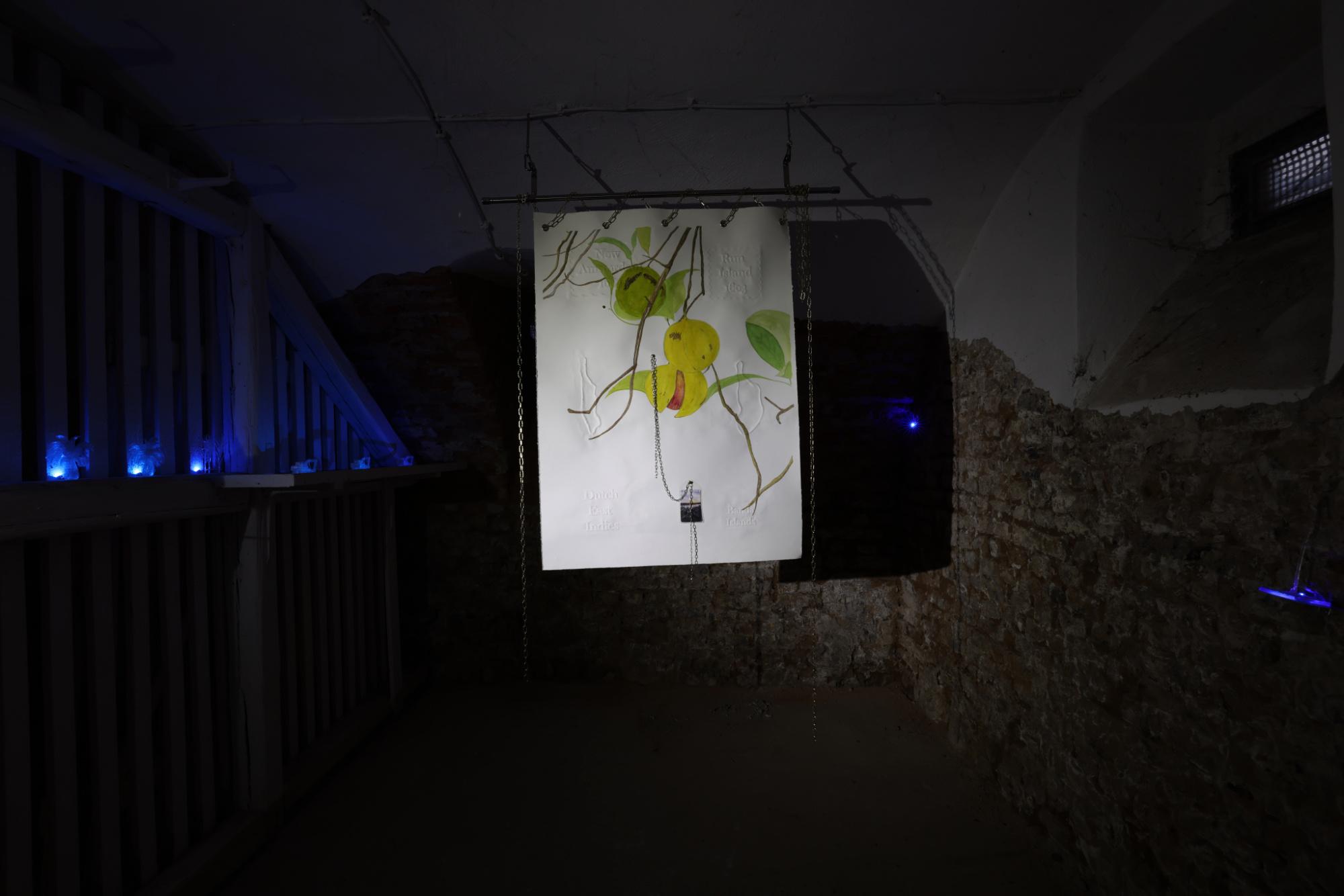
Before the Cultuurstelsel
2026
Watercolour and acrylic with hand embossing on paper, a 5-meter-long chain, a spotlight lamp, and a 98,3 cm aluminium rod
128 x 200 x 35 cm
Mooi Indië adalah gaya seni pada masa kolonial di Indonesia yang berkembang terutama antara tahun 1900 hingga 1930-an. Gaya ini dikenal melalui lukisan pemandangan yang menggambarkan Indonesia sebagai negeri yang damai, indah, dan eksotis seperti surga.
Mooi Indië sendiri awalnya merupakan judul dari sebelas reproduksi lukisan cat air karya seniman Belanda, Fredericus Jacobus van Rossum du Chattel (1856–1917).
Pada tahun 1603, sekelompok pelaut dari East India Company (Perusahaan Hindia Timur Inggris) tiba di Pulau Run, Kepulauan Banda.
Sejarawan John Keay menganggap Pulau Run sebagai tempat lahirnya Imperium Britania karena nilai perdagangan pala dan fuli yang sangat tinggi pada abad ke-17.
Pembantaian Kepulauan Banda (1621) merupakan kampanye militer brutal yang dipimpin oleh Jan Pieterszoon Coen dari VOC (Perusahaan Hindia Timur Belanda) untuk menguasai monopoli perdagangan pala dunia. Saat itu, pala hanya tumbuh secara alami di Kepulauan Banda, Maluku, Indonesia. Untuk mempertahankan kekuasaan tersebut, Belanda secara sistematis membantai, membuat kelaparan, atau memperbudak sekitar 90% dari 15.000 penduduk asli Banda dan menggantinya dengan tenaga kerja budak yang didatangkan dari luar.
Berdasarkan Perjanjian Breda tahun 1667, Inggris mempertahankan Manhattan, yang telah diduduki oleh Duke of York pada tahun 1664, dan mengganti nama ibu kotanya dari New Amsterdam menjadi New York. Sebagai gantinya, Inggris menyerahkan Pulau Run kepada Belanda.
Pada tahun 1810, Inggris merebut Kepulauan Rempah-Rempah dari Belanda. Pemindahan pohon pala ke koloni Inggris lainnya melemahkan dominasi Belanda dalam perdagangan rempah-rempah, sebelum kekuasaan Belanda atas Pulau Run berakhir pada tahun 1949.
Mooi Indië was a colonial-era art style in Indonesia that developed mainly between 1900 and the 1930s, best known for landscape painting that portrayed the country as a peaceful, beautiful, and exotic paradise.
Mooi Indië itself was originally the title of eleven reproductions of the watercolor paintings by the Dutch artist Fredericus Jacobus van Rossum du Chattel (1856-1917).
In 1603, a team of English East India Company sailors reached Run Island in the Banda Islands.
Historian John Keay considers Run Island the birthplace of the British Empire due to its valuable nutmeg and mace trade in the 17th century.
The Banda Islands massacre (1621) was a brutal military campaign led by Jan Pieterszoon Coen of the Dutch East India Company (VOC) to secure a violent global monopoly over nutmeg which at the time only grew naturally in the Banda Archipelago (Moluccas, Indonesia). To enforce this control, the Dutch systematically slaughtered, starved, or enslaved roughly 90% of the 15,000 indigenous Bandanese people and replaced them with imported slave labor.
Under the 1667 Treaty of Breda, England kept Manhattan, which the Duke of York had occupied in 1664, renaming its capital from New Amsterdam to New York, while surrendering Run Island to the Dutch.
In 1810, the British captured the Spice Islands from the Dutch, and the transfer of nutmeg trees to other colonies weakened Dutch spice dominance before Dutch control of Run ended in 1949.
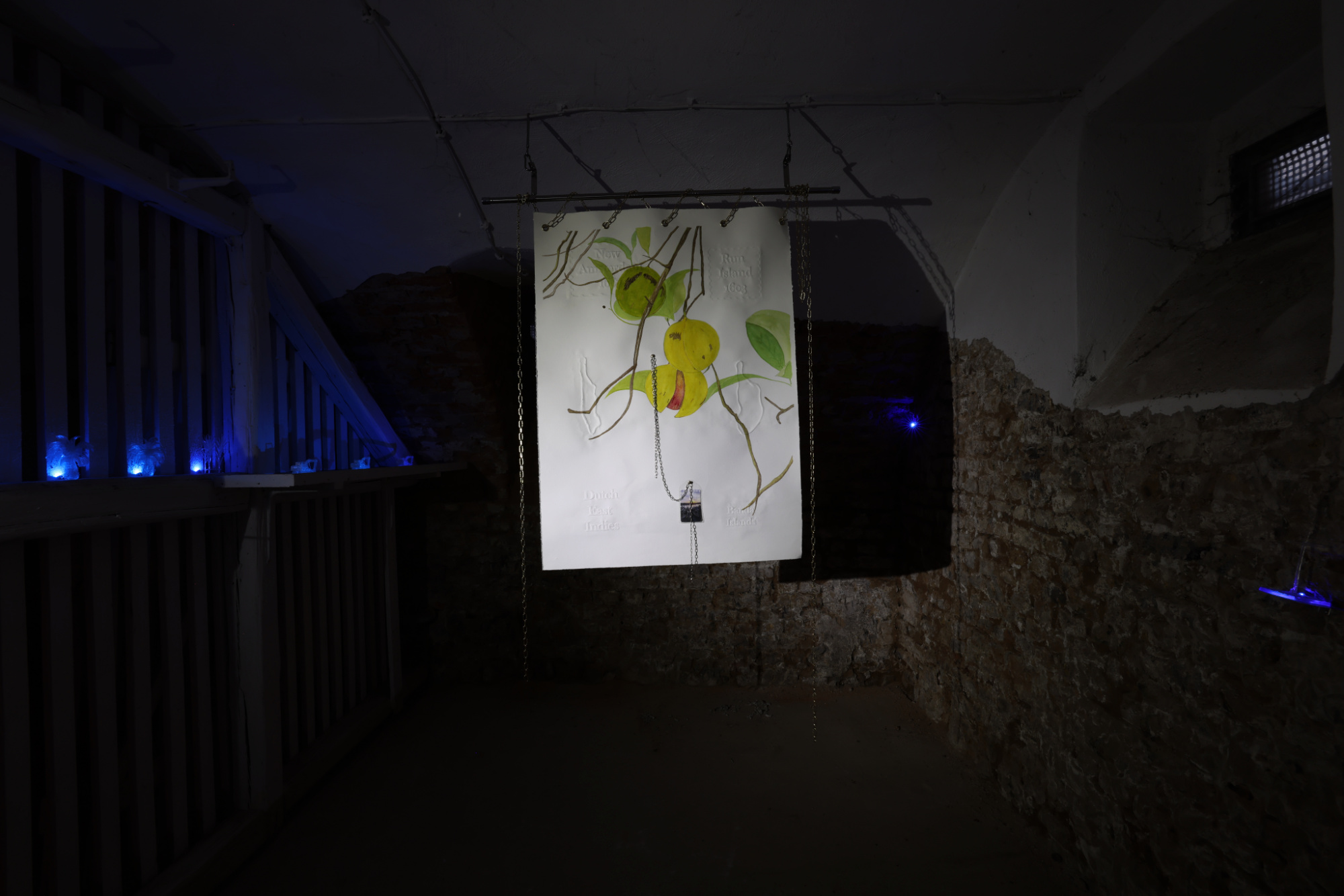
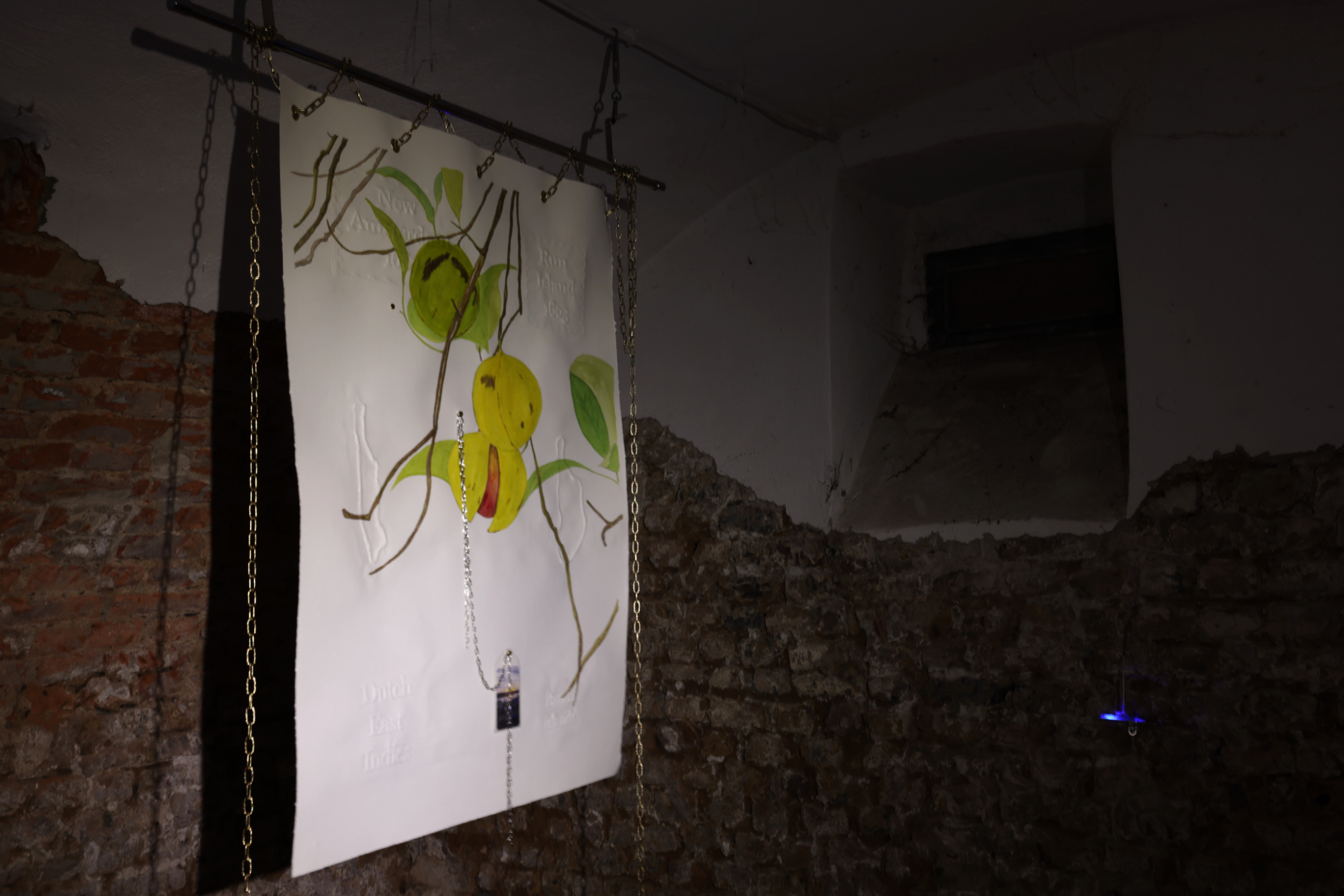
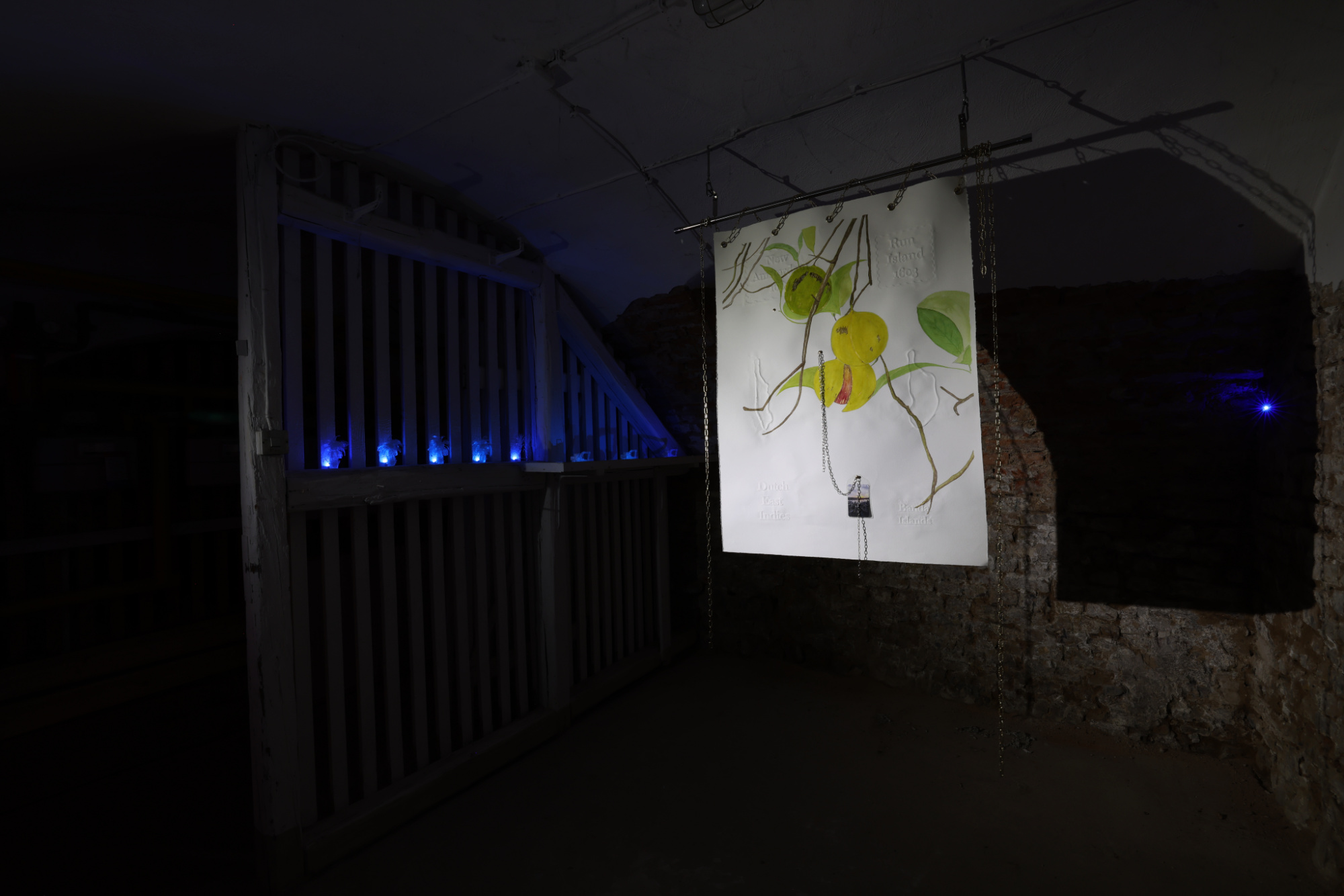
Installation view of the work during Don't Honey Me exhibition with Yu Yang at Lucy
