Transport
Transport
2026
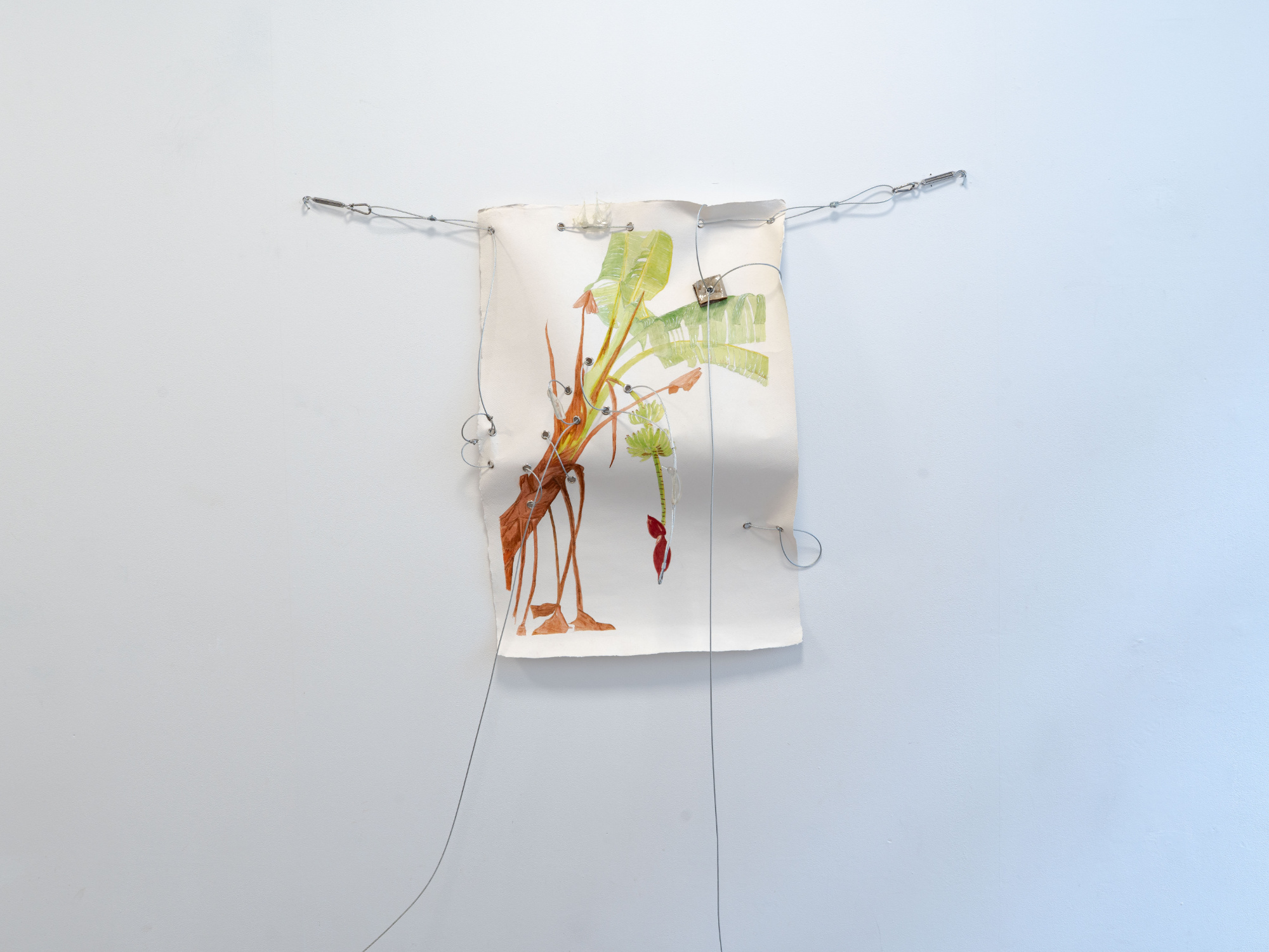
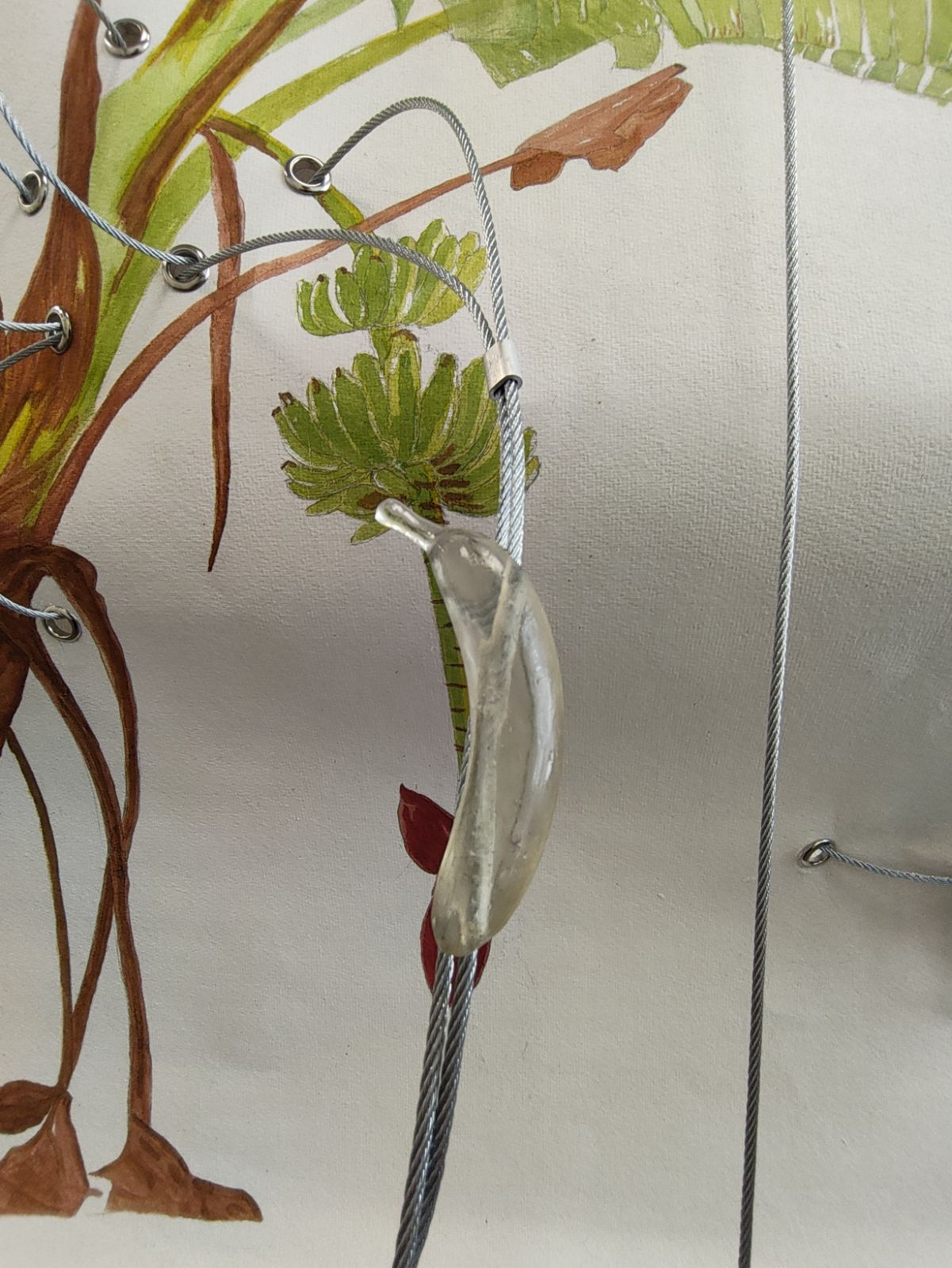
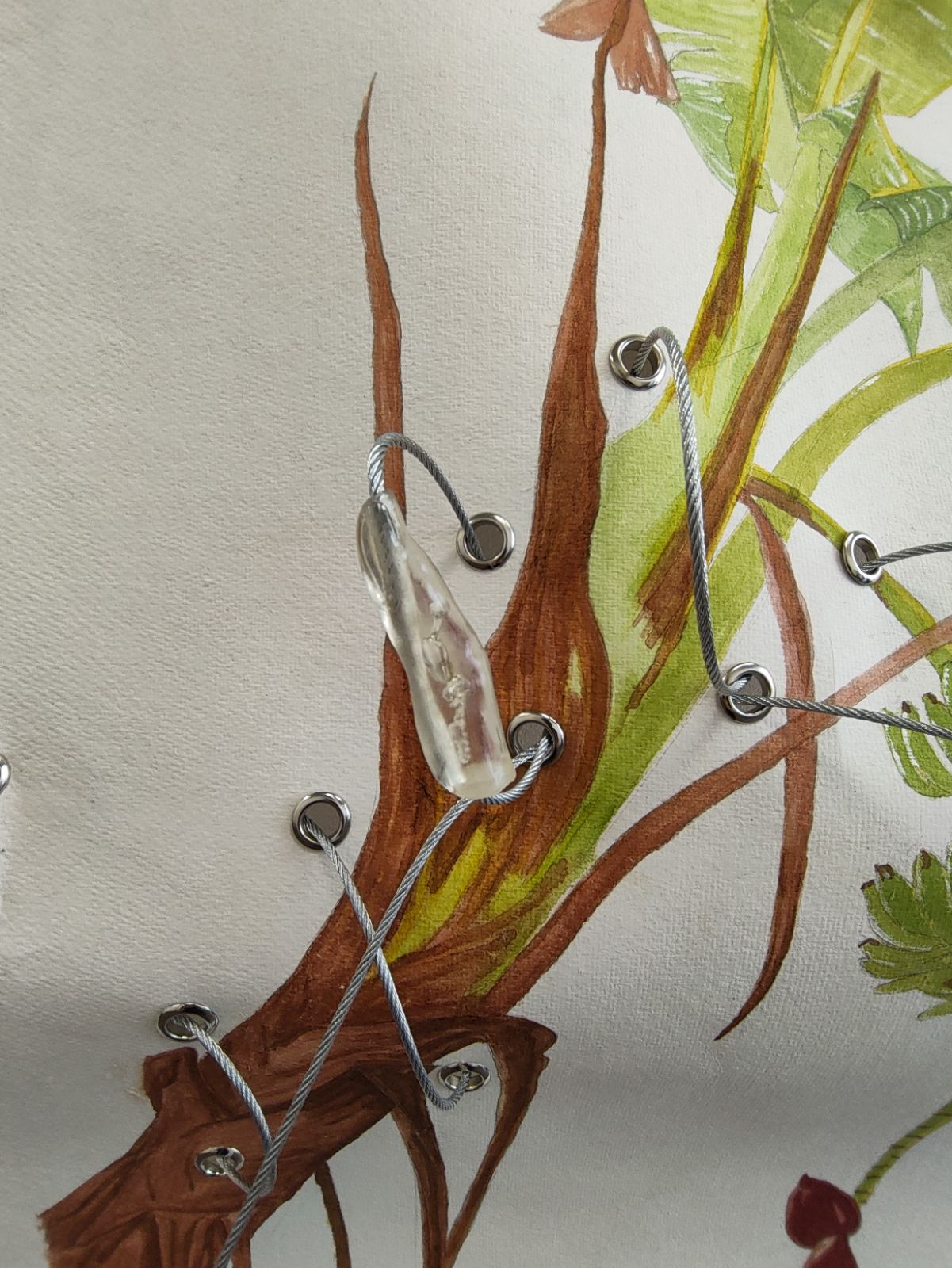
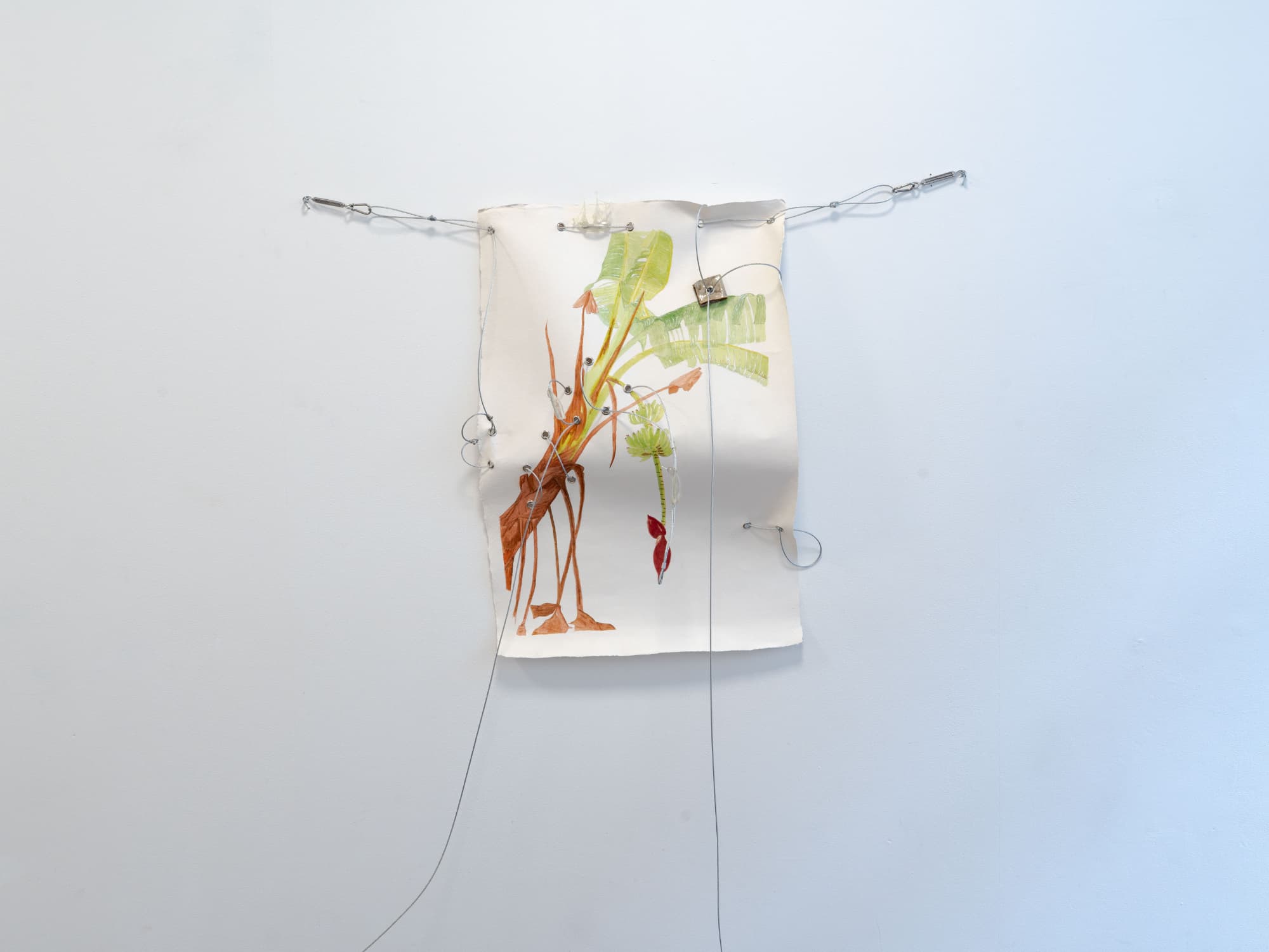
Watercolor and gouache on paper, 3D-printed cured resin objects, banana leaf, and 20 metres of metal wire
6 × 1.5 × 2.5 m
Bananas are considered by horticultural experts to be among the world’s oldest cultivated fruit plants. Ethnogeographer C.O. Sauer noted that Southeast Asian fishermen used dried banana pseudostems as fiber to bind bamboo poles into rafts for coastal fishing. Over thousands of years, the propagation and spread of bananas eventually led to the development of attractive, fleshy, seedless fruits that became an important food source.
The name “banana” became widely known through Arab traders. Because the fruit resembled a finger, it was derived from the Arabic word bana’an, meaning “finger,” which later became “banana” in English.
During the Middle Ages, both Muslims and Christians believed that the banana might have been the forbidden fruit of Paradise.
From the 16th to the 19th century, Portuguese and Spanish traders spread bananas across tropical America. Dutch, British, French, and German traders later helped distribute popular varieties such as “Gros Michel” and Cavendish to West Africa, Latin America, and the Caribbean.
A “banana republic” is a country whose economy heavily depends on exporting a single crop, such as bananas, often under the influence of foreign corporations and characterized by political and economic instability.
Banana bunches are transported through the fields using trolleys on an overhead cableway system, allowing fast and efficient movement from harvest areas to collection points.